
Running a restaurant requires balancing dozens of moving parts every day. Food costs fluctuate, labor expenses change weekly, and customer demand can vary based on seasonality, local events, and economic conditions. While revenue often gets the most attention, profitability depends on understanding exactly where money is coming from and where it is going.
This is why many successful operators rely on a professional restaurant accounting service. Accurate financial reporting, consistent bookkeeping, and proactive financial oversight help restaurant owners make informed decisions that protect margins and support long-term growth.
Whether you operate a single location or manage multiple restaurants, the right accounting support provides the visibility needed to keep your business financially healthy and competitive.

Why Profit Margins Are Challenging in the Restaurant Industry
Restaurants operate in one of the most competitive industries in the country. Even businesses with strong sales can struggle to maintain profitability if expenses are not monitored carefully.
Small changes in food pricing, staffing costs, or inventory management can significantly impact the bottom line. Without reliable financial reporting, these issues often go unnoticed until profits begin to decline.
A restaurant accounting service helps owners identify these trends early and make adjustments before they become larger financial problems.
Rising Food Costs
Food costs are one of the largest expenses for most restaurants. Changes in supplier pricing, waste, spoilage, and portion control can all affect profitability.
Accurate accounting helps owners track food cost percentages over time and identify opportunities to improve purchasing and inventory management.
Labor Cost Pressures
labor is often the second-largest expense category. Overtime, scheduling inefficiencies, and employee turnover can quickly increase payroll costs.
Monitoring labor percentages alongside sales data helps restaurant owners maintain proper staffing levels while protecting margins.
Multiple Revenue Channels
Today’s restaurants often generate revenue through dine-in service, takeout, delivery apps, catering, and online ordering platforms.
Each revenue stream carries different costs and margins. Understanding how each contributes to overall profitability requires detailed financial tracking and analysis.
What Does a Restaurant Accounting Service Include?
A professional accounting service provides much more than bookkeeping. The goal is to create a complete financial system that supports decision-making and operational efficiency.
Accounting services typically include bookkeeping, payroll management, financial reporting, tax planning, cash flow forecasting, and strategic advisory support.
Together, these services provide restaurant owners with a clear picture of business performance.
Bookkeeping and Financial Reporting
Accurate bookkeeping forms the foundation of every successful restaurant operation. Every sale, expense, payroll transaction, and vendor payment must be recorded correctly.
Our Bookkeeping & Payroll Services help restaurant owners maintain accurate financial records while reducing administrative workload.
Reliable monthly reporting allows owners to review performance, compare periods, and identify trends before they impact profitability.
Payroll Administration
Restaurant payroll can be complex. Between hourly employees, salaried managers, overtime calculations, tips, and benefits, payroll errors can become costly.
Professional accounting support helps ensure employees are paid accurately while maintaining compliance with payroll tax requirements.
Cash Flow Management
Profitability and cash flow are not the same thing. A restaurant can show a profit on paper while still experiencing cash shortages.
Cash flow forecasting helps owners anticipate upcoming expenses, prepare for seasonal fluctuations, and maintain sufficient working capital throughout the year.
How Accounting Services for Restaurants Improve Decision-Making
The most successful restaurant owners rely on data rather than assumptions. Financial reports provide objective information that supports better operational and strategic decisions.
Without accurate accounting data, it becomes difficult to determine whether problems stem from food costs, labor inefficiencies, pricing issues, or declining sales.
Identifying High-Performing Menu Items
Menu profitability analysis helps owners understand which items contribute most to overall profits.
By comparing food costs, preparation expenses, and sales volume, restaurants can focus on promoting items that generate stronger margins.
Evaluating Location Performance
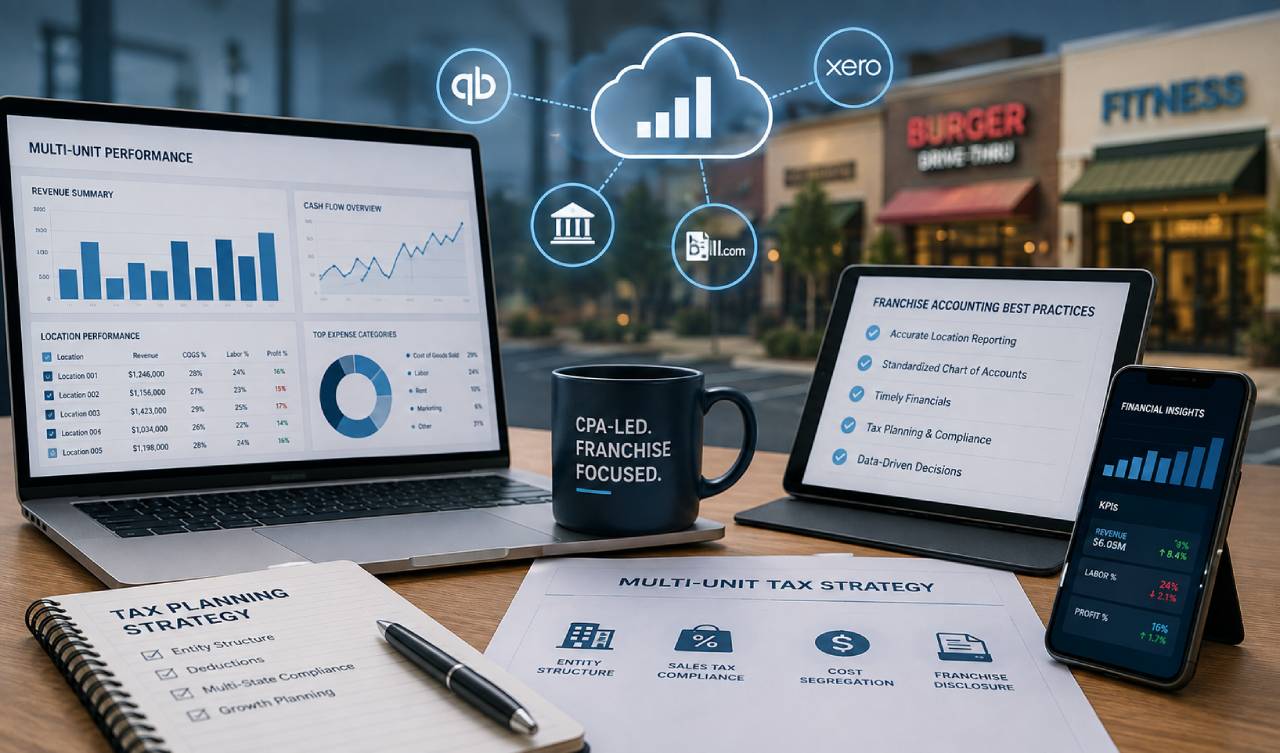
For multi-unit operators, accounting data provides visibility into how each location performs.
Standardised reporting makes it easier to compare revenue, expenses, labor costs, and profitability across locations.
This information supports expansion decisions and helps identify locations that may require operational improvements.
Supporting Growth Strategies
Growth requires capital, planning, and financial discipline.
Whether opening a new location, renovating an existing restaurant, or acquiring another business, financial reporting provides the data needed to evaluate opportunities and risks.
Our Business Structure & Advisory services help restaurant owners assess growth opportunities while maintaining financial stability.
The Importance of Restaurant-Specific Accounting Expertise
Restaurants have unique accounting requirements that differ from many other industries.
A general bookkeeper may understand accounting fundamentals, but restaurant accounting requires industry-specific knowledge related to inventory, food costs, labor management, and operational reporting.
Inventory Tracking
Inventory is one of the most important assets for a restaurant.
Poor inventory management often leads to waste, spoilage, theft, and inaccurate cost reporting.
Proper accounting systems help restaurant owners monitor inventory levels, track usage patterns, and identify opportunities to reduce losses.
Vendor Management
Restaurants typically work with multiple suppliers and distributors.
Tracking vendor payments, purchase trends, and pricing changes allows owners to negotiate better terms and manage expenses more effectively.
Industry-Specific Reporting
Restaurant operators benefit from reports that focus on metrics such as:
- Prime costs
- Food cost percentage
- labor percentage
- Average ticket value
- Sales by category
- Gross profit margins
These metrics provide insight that standard financial statements alone cannot deliver.
Tax Planning and Compliance for Restaurants
Tax compliance can become increasingly complicated as restaurant operations grow.
Restaurants often face challenges related to payroll taxes, sales tax reporting, tip reporting requirements, and multi-state compliance obligations.
Proper planning helps reduce risk while identifying legitimate opportunities to improve tax efficiency.
Managing Sales Tax Requirements
Restaurants must collect and remit sales tax accurately.
Errors in sales tax reporting can result in penalties and unnecessary audits.
Consistent accounting processes help ensure compliance while reducing administrative burden.
Payroll Tax Compliance
Payroll tax reporting becomes more complex as staffing levels increase.
Accurate payroll records help restaurant owners avoid costly penalties and maintain compliance with federal and state regulations.
Strategic Tax Planning
Effective tax planning is not limited to year-end filing.
Ongoing planning throughout the year helps restaurant owners make better decisions regarding equipment purchases, expansion investments, and entity structure.
Our Tax Preparation & Planning services help restaurant operators proactively manage tax obligations while supporting long-term business goals.
Technology and Modern Restaurant Accounting
Technology continues to transform restaurant accounting.
Modern accounting systems integrate directly with POS platforms, payroll software, inventory systems, and banking platforms to improve accuracy and efficiency.
These integrations reduce manual data entry and provide real-time financial visibility.
Automation and Efficiency
Automation helps reduce repetitive administrative tasks while improving consistency.
From bank reconciliations to invoice processing, automated workflows free up valuable time and reduce the risk of errors.
Restaurant owners seeking long-term financial visibility often benefit from advanced advisory support. Our CFO Services & Financial Due Diligence provide strategic guidance that goes beyond basic accounting and reporting.
Choosing the Right Restaurant Accounting Firm
Selecting the right accounting partner can significantly impact a restaurant’s financial performance.
The ideal provider understands restaurant operations, communicates clearly, and delivers actionable financial insights.
To learn more about our approach to supporting restaurant owners and franchise operators, visit our About Us page.
Final Thoughts
Protecting profit margins requires more than increasing sales. It requires accurate financial reporting, proactive planning, and clear visibility into every aspect of your restaurant’s performance.
A professional restaurant accounting service helps owners understand their numbers, improve operational efficiency, and make better decisions that support sustainable growth.
If you’re looking for financial systems that provide greater clarity and control, Contact Us to learn how Hildreth & Puga CPAs can support your restaurant’s long-term success.
FAQs
Why should restaurants use a specialised restaurant accounting service?
A specialised restaurant accounting service understands industry-specific challenges such as food costs, labor management, inventory tracking, tip reporting, and multiple revenue streams. This expertise helps owners maintain accurate financial records and make better business decisions.
How do accounting services for restaurants help improve profit margins?
Accounting services help identify cost trends, monitor key performance indicators, track food and labor expenses, and provide financial insights that support more profitable operational decisions.
What financial reports should restaurant owners review regularly?
Restaurant owners should review profit and loss statements, balance sheets, cash flow statements, food cost reports, labor cost reports, and location-level performance reports on a regular basis.
Can a restaurant accounting firm help with multi-location operations?
Yes. A restaurant accounting firm can provide consolidated reporting, location comparisons, cash flow management, and financial oversight across multiple locations, making it easier to monitor performance and support growth.
How often should restaurant financial records be updated?
Financial records should ideally be updated daily or weekly, with detailed financial reporting reviewed monthly. Consistent bookkeeping helps ensure accuracy and allows owners to address issues before they affect profitability.
What are the biggest financial challenges restaurant owners face?
Common challenges include rising food costs, labor expenses, inventory management, cash flow fluctuations, tax compliance, and maintaining profitability across multiple revenue channels.
When should a restaurant owner hire professional accounting support?
Many restaurant owners benefit from professional accounting support when opening a new location, experiencing rapid growth, struggling with cash flow, preparing for expansion, or needing more accurate financial reporting and forecasting.